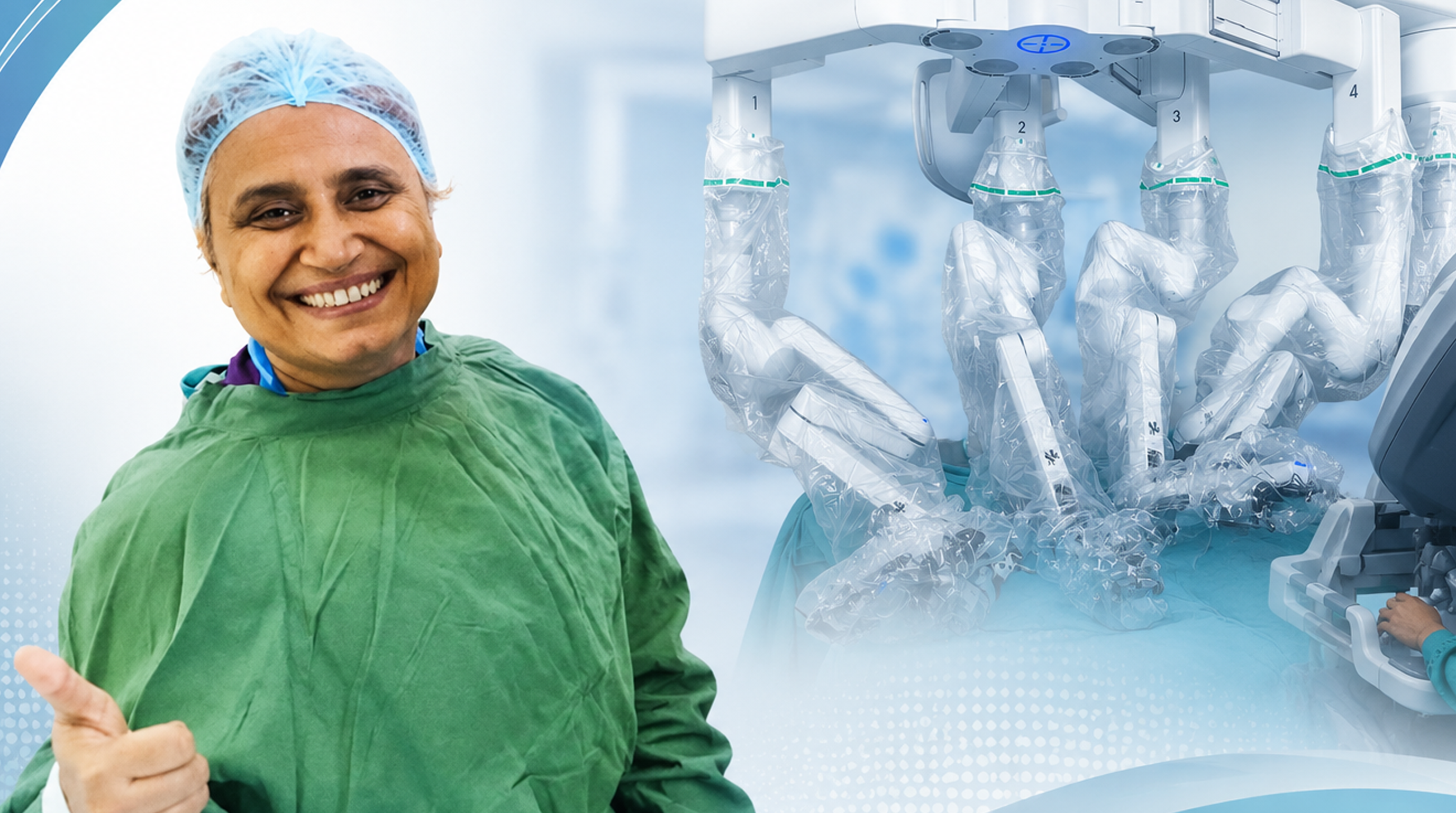
Robotic Hysterectomy in Noida & Ghaziabad
Advanced Minimally Invasive Surgery for Faster Recovery and Better Outcomes
A robotic hysterectomy is an advanced minimally invasive surgical procedure used to remove the uterus with the assistance of robotic technology. This modern approach offers greater precision, enhanced visualization, and improved surgical control, allowing gynecologists to perform complex procedures through small incisions. Compared to traditional open surgery, robotic hysterectomy is associated with less pain, minimal blood loss, smaller scars, shorter hospital stays, and quicker recovery.
If you are looking for robotic hysterectomy in Noida and Ghaziabad, experienced gynecologists provide state-of-the-art robotic-assisted surgery for various gynecological conditions while ensuring personalized care and optimal surgical outcomes.
What is a Robotic Hysterectomy?
A robotic hysterectomy is a type of laparoscopic surgery in which the surgeon controls robotic instruments from a specialized console. The robotic system translates the surgeon's hand movements into highly precise movements of miniature surgical instruments.
Despite the use of robotic technology, the surgeon remains in complete control throughout the procedure. The robot does not perform the surgery independently.
Depending on the medical condition, the surgery may involve total hysterectomy, partial (supracervical) hysterectomy, or total hysterectomy with removal of the ovaries and fallopian tubes when medically indicated.
Who May Need a Robotic Hysterectomy?
Your gynecologist may recommend robotic hysterectomy for conditions such as:
- Large uterine fibroids
- Adenomyosis
- Endometriosis
- Abnormal uterine bleeding
- Chronic pelvic pain
- Uterine prolapse in selected cases
- Precancerous changes of the uterus or cervix
- Early-stage gynecological cancers
- Recurrent uterine infections
- Failed conservative treatment for benign uterine conditions
The suitability of robotic surgery depends on your overall health and the specific condition being treated.
Benefits of Robotic Hysterectomy
Compared with conventional open surgery, robotic-assisted hysterectomy offers several advantages:
- Smaller surgical incisions
- Less postoperative pain
- Minimal blood loss
- Lower risk of infection
- Greater surgical precision
- Better visualization with 3D high-definition imaging
- Reduced damage to surrounding tissues
- Minimal scarring
- Shorter hospital stay
- Faster recovery and return to daily activities
These benefits make robotic hysterectomy an excellent option for many women requiring uterine surgery.
Symptoms That May Require Evaluation
You should consult a gynecologist if you experience:
- Heavy or prolonged menstrual bleeding
- Severe pelvic pain
- Persistent abnormal uterine bleeding
- Large fibroids causing pressure symptoms
- Chronic pelvic discomfort
- Pain during intercourse
- Recurrent uterine infections
- Symptoms of uterine prolapse
- Endometriosis that does not respond to medication
Early evaluation helps determine whether robotic surgery is the most appropriate treatment.
Preoperative Evaluation
Before surgery, your gynecologist may recommend:
- Detailed medical history
- Physical and pelvic examination
- Blood tests
- Pelvic ultrasound
- MRI scan when required
- Pap smear if indicated
- Endometrial biopsy for abnormal bleeding
- ECG and anesthesia assessment
These investigations help ensure the procedure is planned safely and effectively.
How is Robotic Hysterectomy Performed?
The procedure is performed under general anesthesia.
- Small incisions are made in the abdomen.
- A tiny camera provides a magnified 3D view of the pelvic organs.
- Robotic surgical instruments are inserted through the small incisions.
- The surgeon controls the robotic arms from a nearby console with exceptional precision.
- The uterus is carefully detached and removed using minimally invasive techniques.
- The small incisions are closed with sutures.
The procedure typically takes between 2 to 4 hours, depending on the complexity of the surgery.
Recovery After Robotic Hysterectomy
Most women experience a quicker recovery compared to traditional open surgery.
- Hospital stay of 1–2 days depending on recovery and medical condition
- Walking within 24 hours after surgery
- Mild postoperative discomfort managed with medications
- Return to light daily activities within 2–3 weeks
- Full recovery in approximately 4–6 weeks
Your gynecologist will provide detailed postoperative instructions to support healing.
Possible Risks
Although robotic hysterectomy is considered safe, as with any surgery, potential risks include bleeding, infection, injury to nearby organs such as the bladder, bowel, or ureters, blood clots, anesthesia-related complications, and a rare need to convert to open surgery.
Choosing an experienced robotic gynecologic surgeon helps minimize these risks.
Life After Hysterectomy
Following a hysterectomy, menstrual periods stop permanently and pregnancy is no longer possible. If the ovaries are preserved, natural hormone production usually continues until menopause. If both ovaries are removed, menopause may occur immediately, and your doctor will discuss appropriate management options.
Most women experience significant improvement in symptoms and quality of life after recovery.
When Should You See a Gynecologist?
Consult a gynecologist if you have:
- Persistent heavy menstrual bleeding
- Large or symptomatic uterine fibroids
- Chronic pelvic pain
- Endometriosis not responding to medication
- Recurrent abnormal uterine bleeding
- Uterine prolapse
- Suspicion of gynecological cancer
- Difficulty performing daily activities due to gynecological symptoms
Early consultation allows you to explore all available treatment options, including minimally invasive robotic surgery.
Why Choose Robotic Hysterectomy in Noida & Ghaziabad?
- Experienced gynecologic surgeons
- Advanced robotic surgical systems
- High-definition 3D imaging
- Minimally invasive techniques
- Comprehensive perioperative care
- Personalized treatment plans
- Evidence-based surgical practices
For many women, yes. Robotic hysterectomy offers smaller incisions, less pain, reduced blood loss, quicker recovery, and a shorter hospital stay compared to traditional open surgery.
No. The surgeon remains in full control throughout the procedure. The robotic system assists by enhancing precision and flexibility but does not operate independently.
Most women resume light daily activities within 2–3 weeks, with complete recovery typically taking 4–6 weeks, depending on the individual's health and the complexity of the surgery.
If your ovaries are preserved, you generally will not enter menopause immediately. If both ovaries are removed, surgical menopause occurs, and your doctor will discuss symptom management.
Yes. When performed by an experienced gynecologic surgeon, robotic hysterectomy is a safe and effective procedure with a low risk of complications.
Women with symptomatic fibroids, adenomyosis, endometriosis, abnormal uterine bleeding, uterine prolapse, or selected early-stage gynecological cancers may be suitable candidates. Your gynecologist will determine the best surgical approach based on your individual condition.

Dr.Anjana Singh
Our Services
- Robotic Hysterectomy
- Robotic Myomectomy (Fibroid Surgery)
- Robotic Endometriosis Surgery
- Robotic Ovarian Cyst Surgery
- Robotic Pelvic Organ Prolapse Repair
- Robotic Cancer Surgery
- Robotic Fertility-Preserving Surgery
- Single-Port Robotic Surgery
- Why Choose Robotic Surgery?
- Recovery After Robotic Surgery
Contact Info
Address
123 MG Road, Prayagraj, Uttar Pradesh, India
Phone
+91 98765 43210
care@womenshealth.com
Working Hours
Mon - Sat: 9:00 AM - 7:00 PM