Pelvic Floor Disorders Treatment in Noida & Ghaziabad
Expert Diagnosis, Advanced Treatment & Comprehensive Women's Pelvic Health Care
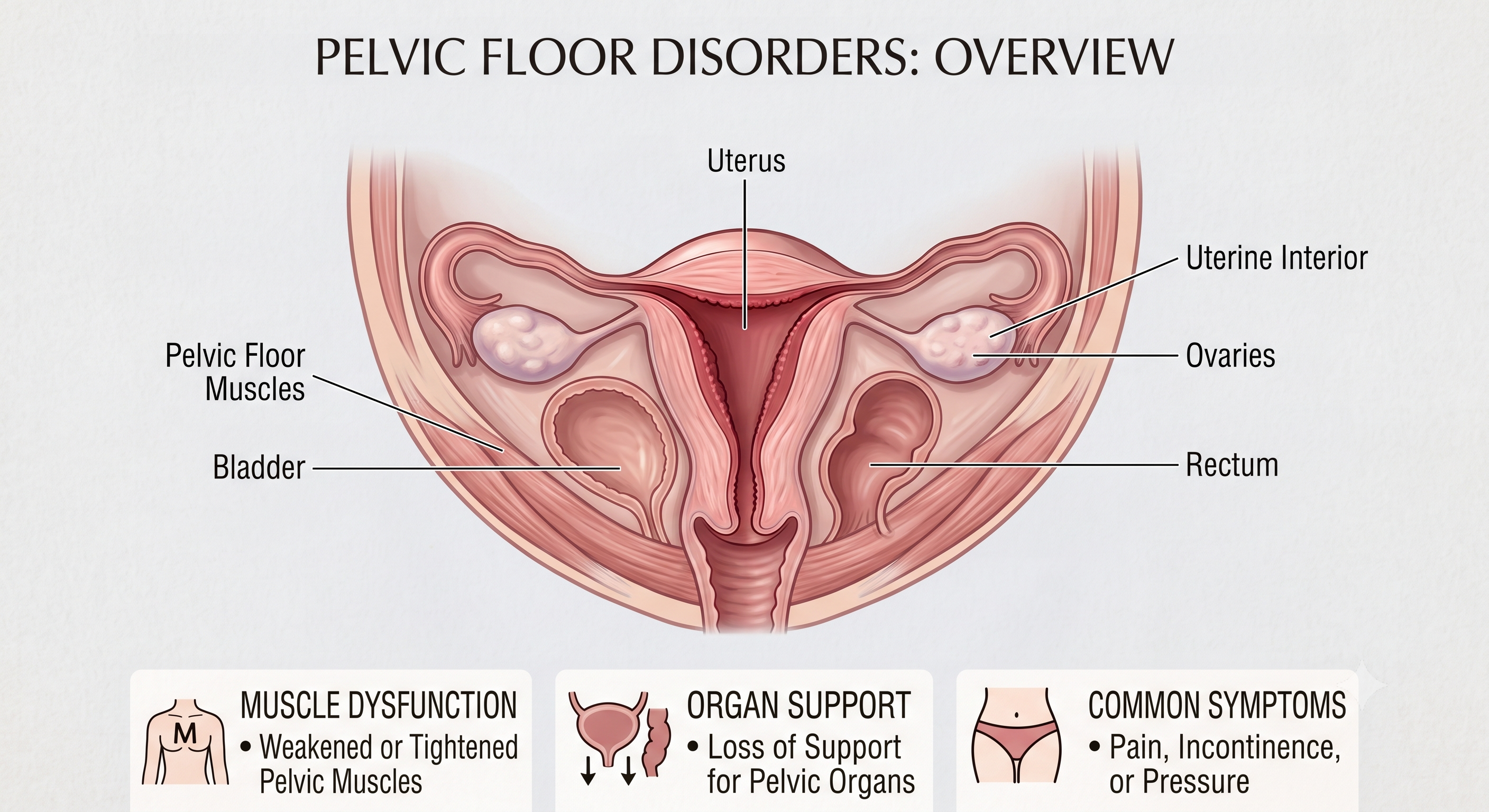
Pelvic floor disorders are common conditions that occur when the muscles, ligaments, and connective tissues supporting the pelvic organs become weakened or damaged. These disorders can affect the bladder, uterus, rectum, and bowel, leading to symptoms such as urinary leakage, pelvic pressure, constipation, and pelvic organ prolapse. Although pelvic floor disorders become more common with age and after childbirth, they can affect women of all ages.
If you are looking for pelvic floor disorder treatment in Noida and Ghaziabad, experienced gynecologists offer comprehensive evaluation and personalized treatment, including pelvic floor rehabilitation, medications, minimally invasive procedures, and advanced reconstructive surgery when needed.
What are Pelvic Floor Disorders?
The pelvic floor is a group of muscles and connective tissues that support the bladder, uterus, vagina, and rectum. These muscles also help control urination, bowel movements, and sexual function.
When these muscles weaken or become injured, the pelvic organs may lose support, resulting in pelvic floor disorders that can significantly affect daily activities and quality of life. Early diagnosis and treatment can restore pelvic function and prevent further complications.
Types of Pelvic Floor Disorders
- Pelvic Organ Prolapse (POP) – Pelvic organ prolapse occurs when one or more pelvic organs descend into or outside the vaginal canal due to weakened support muscles. Types include uterine prolapse, bladder prolapse (cystocele), rectal prolapse (rectocele), vaginal vault prolapse, and enterocele (small bowel prolapse).
- Urinary Incontinence – Loss of bladder control that may include stress urinary incontinence, urge urinary incontinence, or mixed urinary incontinence.
- Fecal Incontinence – Difficulty controlling bowel movements due to weakened pelvic floor muscles.
- Chronic Pelvic Floor Dysfunction – Poor coordination or weakness of pelvic floor muscles leading to pain, constipation, or difficulty emptying the bladder or bowel.
Symptoms of Pelvic Floor Disorders
Common symptoms include:
- Feeling of heaviness or pressure in the pelvis
- A bulge or tissue protruding from the vagina
- Urinary leakage while coughing, sneezing, or exercising
- Frequent urge to urinate
- Difficulty emptying the bladder
- Constipation
- Difficulty passing stools
- Accidental bowel leakage
- Pain during sexual intercourse
- Chronic pelvic pain
- Lower back discomfort
Symptoms often worsen after prolonged standing or physical activity.
Causes and Risk Factors
Several factors can weaken the pelvic floor muscles, including:
- Pregnancy and vaginal childbirth
- Multiple pregnancies
- Aging
- Menopause
- Obesity
- Chronic constipation
- Chronic coughing
- Heavy lifting
- Previous pelvic surgery
- Connective tissue disorders
- Family history
Maintaining pelvic floor strength can reduce the risk of developing these conditions.
Diagnosis of Pelvic Floor Disorders
Your gynecologist may recommend:
- Detailed medical history
- Physical and pelvic examination
- Pelvic floor muscle assessment
- Urine analysis
- Bladder function tests (urodynamic studies)
- Pelvic ultrasound
- MRI (when indicated)
- Cystoscopy in selected cases
- Defecography for bowel-related symptoms
A comprehensive evaluation helps identify the underlying problem and determine the most effective treatment.
Pelvic Floor Disorder Treatment in Noida & Ghaziabad
Treatment depends on the type and severity of the condition, age, lifestyle, and future pregnancy plans.
-
Pelvic Floor Exercises (Kegel Exercises)
Strengthening pelvic floor muscles is often the first step in treatment. Benefits include improved bladder control, better pelvic support, reduced urinary leakage, and improved recovery after childbirth. Your doctor may recommend supervised pelvic floor physiotherapy for the best results.
-
Lifestyle Modifications
Simple lifestyle changes can improve symptoms, including maintaining a healthy weight, treating chronic constipation, avoiding heavy lifting, stopping smoking, managing chronic cough, eating a fiber-rich diet, and staying physically active.
-
Medications
Depending on your symptoms, treatment may include medications for overactive bladder, vaginal estrogen therapy for postmenopausal women when appropriate, stool softeners or laxatives for constipation, and pain management medications when needed.
-
Pessary Therapy
A vaginal pessary is a removable medical device placed inside the vagina to support prolapsed pelvic organs. It is a non-surgical option suitable for many women.
-
Minimally Invasive and Surgical Treatment
When conservative treatment is ineffective, surgery may be recommended. Procedures may include pelvic organ prolapse repair, laparoscopic pelvic floor reconstruction, vaginal prolapse repair, sling procedures for urinary incontinence, and robotic-assisted pelvic reconstructive surgery where available. Minimally invasive surgery often offers smaller incisions, less pain, faster recovery, and shorter hospital stay.
Possible Complications
Without treatment, pelvic floor disorders may lead to worsening pelvic organ prolapse, chronic urinary leakage, recurrent urinary tract infections, chronic constipation, sexual dysfunction, reduced mobility, emotional distress, and poor quality of life.
Timely treatment helps restore normal function and prevents disease progression.
Can Pelvic Floor Disorders Be Prevented?
Although not all cases can be prevented, you can reduce your risk by:
- Performing regular pelvic floor exercises
- Maintaining a healthy body weight
- Preventing chronic constipation
- Avoiding excessive heavy lifting
- Managing chronic cough
- Staying physically active
- Following postnatal pelvic floor rehabilitation after childbirth
These healthy habits support long-term pelvic health.
When Should You See a Gynecologist?
Consult your gynecologist if you experience:
- Urinary leakage
- A bulge in the vagina
- Persistent pelvic pressure
- Difficulty passing urine or stool
- Chronic constipation
- Pain during intercourse
- Recurrent urinary infections
- Symptoms affecting your daily activities
Early diagnosis can prevent symptoms from becoming more severe and improve treatment outcomes.
Why Choose Pelvic Floor Disorder Treatment in Noida & Ghaziabad?
- Experienced gynecologists
- Advanced diagnostic facilities
- Pelvic floor rehabilitation programs
- Minimally invasive surgical techniques
- Personalized treatment plans
- Comprehensive care to improve bladder and bowel control
- Support for long-term quality of life
Early signs include urinary leakage, pelvic heaviness, difficulty controlling bowel movements, constipation, and a feeling of a vaginal bulge.
Yes. Regularly performed Kegel exercises can strengthen pelvic floor muscles, improve bladder control, and reduce mild prolapse symptoms.
Most cases are not emergencies, but prompt evaluation is important to prevent worsening symptoms and complications.
No. Many women improve with pelvic floor physiotherapy, lifestyle modifications, medications, or pessary therapy. Surgery is recommended only when conservative treatments are not effective or symptoms are severe.
Yes. Pregnancy and vaginal delivery are among the most common causes of pelvic floor weakness. Early rehabilitation can help restore muscle strength and function.
Yes. Reduced estrogen levels after menopause can weaken pelvic tissues, increasing the risk of prolapse and urinary incontinence

Dr. Anjana Singh
Our Services
Contact Info
Address
123 MG Road, Prayagraj, Uttar Pradesh, India
Phone
+91 98765 43210
care@womenshealth.com
Working Hours
Mon - Sat: 9:00 AM - 7:00 PM