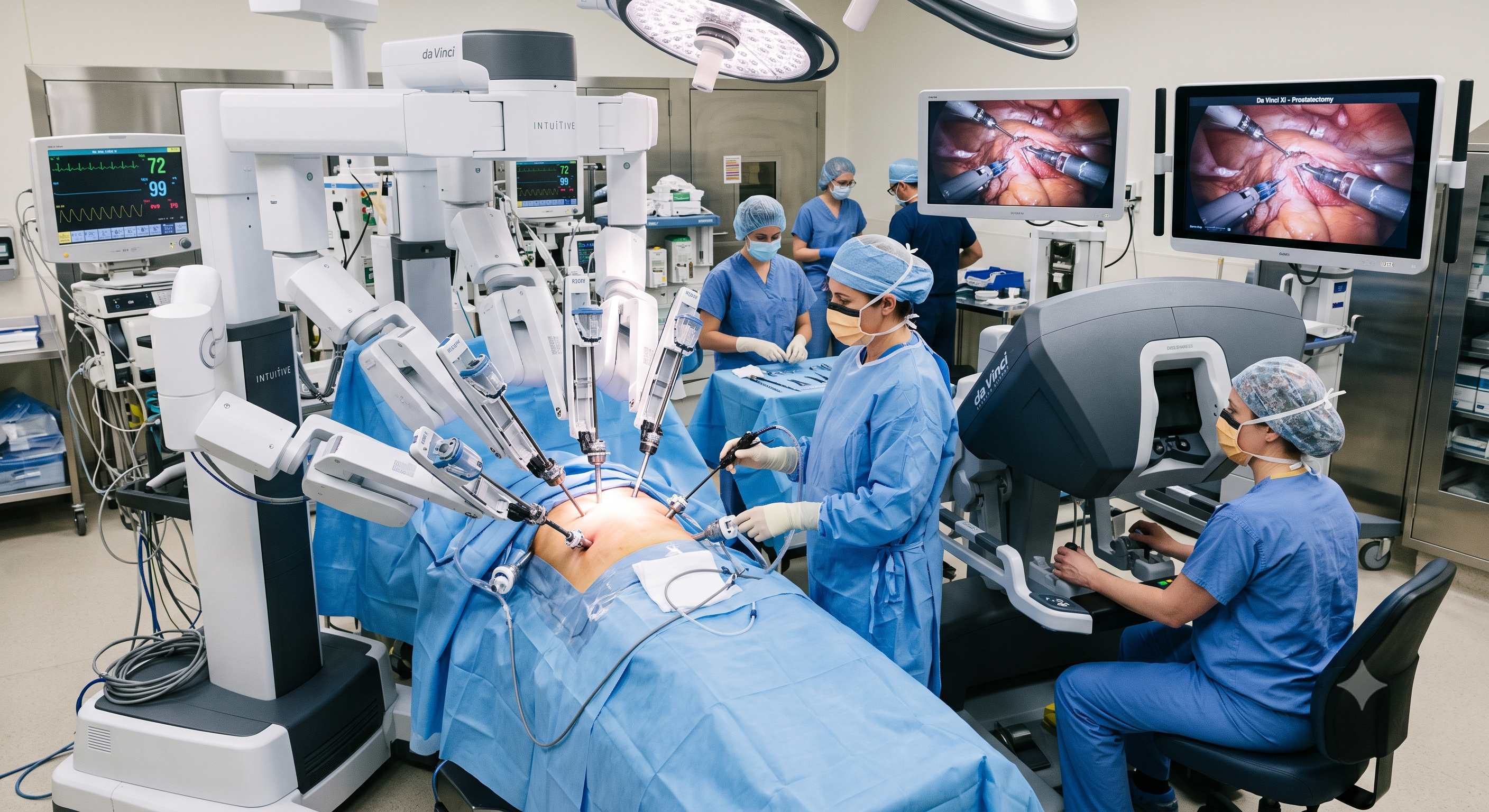
Robotic Cancer Surgery in Noida & Ghaziabad
Advanced Robotic-Assisted Gynecologic Cancer Surgery for Precision, Safety & Faster Recovery
Robotic cancer surgery is an advanced minimally invasive surgical technique used to treat various gynecological cancers with exceptional precision. By combining the expertise of experienced gynecologic oncologists with state-of-the-art robotic technology, this approach allows complex cancer surgeries to be performed through small incisions, offering less pain, reduced blood loss, faster recovery, and excellent surgical outcomes.
If you are looking for robotic cancer surgery in Noida and Ghaziabad, experienced gynecologic cancer specialists provide comprehensive cancer care using advanced robotic-assisted procedures, personalized treatment plans, and a multidisciplinary approach to help achieve the best possible outcomes.
What is Robotic Cancer Surgery?
Robotic cancer surgery is a minimally invasive procedure in which the surgeon uses a robotic-assisted surgical system to remove cancerous tissue with greater precision and control. The robotic platform provides high-definition 3D visualization and flexible surgical instruments that can perform delicate movements beyond the capability of the human hand.
It is important to understand that the robotic system does not perform the surgery independently. The surgeon remains in complete control throughout the procedure.
Robotic surgery is commonly used for selected patients with early-stage gynecological cancers and certain complex benign conditions. The suitability of robotic surgery depends on the type, stage, and extent of the disease.
Gynecological Cancers Treated with Robotic Surgery
Depending on the stage and individual patient factors, robotic surgery may be recommended for:
- Endometrial (Uterine) Cancer – Robotic surgery is widely used for the treatment and staging of early-stage endometrial cancer.
- Cervical Cancer – Selected patients with early-stage cervical cancer may benefit from robotic-assisted surgery when appropriate. Your surgeon will determine whether this approach is suitable based on current clinical guidelines and your specific condition.
- Ovarian Cancer – Robotic surgery may be considered for carefully selected patients, particularly for diagnosis, staging, or treatment of early-stage disease. Advanced ovarian cancer often requires a different surgical approach.
- Precancerous Gynecological Conditions – Certain high-risk or precancerous conditions may also be managed with minimally invasive robotic procedures when indicated.
Every treatment plan is individualized after careful evaluation.
Conditions That May Require Surgical Evaluation
Your doctor may recommend further assessment if you experience:
- Abnormal vaginal bleeding, especially after menopause
- Persistent pelvic pain
- Abdominal swelling or bloating
- Unexplained weight loss
- Persistent abnormal vaginal discharge
- Pelvic mass detected on imaging
- Positive cervical biopsy or abnormal cervical screening
- Family history of gynecological cancers
- Suspicious findings on ultrasound, MRI, or CT scan
Early diagnosis plays a critical role in improving cancer treatment outcomes.
Benefits of Robotic Cancer Surgery
Compared with traditional open surgery, robotic-assisted procedures offer several advantages for appropriately selected patients:
- Smaller incisions
- Greater surgical precision
- High-definition 3D visualization
- Better preservation of surrounding healthy tissues
- Less postoperative pain
- Reduced blood loss
- Lower risk of infection
- Minimal scarring
- Shorter hospital stay
- Faster recovery
- Earlier return to normal daily activities
The choice of surgical approach depends on the patient's condition and the surgeon's assessment.
Diagnosis Before Surgery
Before planning robotic cancer surgery, your specialist may recommend:
- Detailed medical history
- Physical and pelvic examination
- Pap smear when indicated
- Cervical biopsy
- Endometrial biopsy
- Pelvic ultrasound
- MRI scan
- CT scan or PET-CT when required
- Blood investigations
- Tumor marker tests such as CA-125 when appropriate
- Chest imaging
- ECG and pre-anesthesia evaluation
These investigations help determine the type, stage, and extent of the disease and guide treatment planning.
How is Robotic Cancer Surgery Performed?
The procedure is performed under general anesthesia.
- Several small incisions are made in the abdomen.
- A high-definition 3D camera provides a magnified view of the pelvic organs.
- Robotic surgical instruments are introduced through the incisions.
- The surgeon precisely removes the cancerous tissue and, when necessary, nearby lymph nodes or other affected structures according to accepted oncologic principles.
- Specimens are sent for pathological examination.
- The small incisions are closed with sutures.
The duration of surgery varies depending on the type and complexity of the cancer being treated.
Recovery After Robotic Cancer Surgery
Recovery is generally faster than after traditional open surgery.
- Hospital stay of 1–3 days depending on the procedure and recovery
- Early walking within 24 hours
- Less postoperative discomfort
- Gradual return to light activities within 2–4 weeks
- Complete recovery over 4–8 weeks, depending on the extent of surgery
Your surgeon will schedule follow-up appointments to review pathology results and discuss whether additional treatments such as chemotherapy or radiation therapy are recommended.
Multidisciplinary Cancer Care
Effective cancer treatment often involves a team of specialists working together, including gynecologic oncologists, medical oncologists, radiation oncologists, radiologists, pathologists, anesthesiologists, oncology nurses, nutritionists, and rehabilitation specialists.
A multidisciplinary approach helps ensure personalized and evidence-based cancer care
Possible Risks
Although robotic cancer surgery is considered safe when performed by experienced specialists, potential risks include bleeding, infection, injury to nearby organs such as the bladder, bowel, or ureters, blood clots, lymphatic complications, need for conversion to open surgery in selected cases, and anesthesia-related complications.
Your surgeon will explain the potential risks and expected benefits based on your specific diagnosis.
When Should You See a Gynecologic Oncologist?
Consult a specialist if you have:
- Persistent abnormal vaginal bleeding
- Bleeding after menopause
- Abnormal Pap smear or cervical biopsy results
- Persistent pelvic pain
- Unexplained abdominal bloating
- A pelvic mass detected during examination or imaging
- Family history of gynecologic cancers
- Symptoms that do not improve with routine treatment
Early consultation improves the chances of timely diagnosis and successful treatment.
Why Choose Robotic Cancer Surgery in Noida & Ghaziabad?
- Experienced gynecologic oncologists
- Advanced robotic surgical systems
- High-definition 3D imaging
- Minimally invasive techniques
- Comprehensive cancer staging
- Coordinated multidisciplinary care
- Personalized treatment plans focused on effective cancer management and recovery
Yes. When performed by an experienced gynecologic oncologist for appropriately selected patients, robotic cancer surgery is a safe and effective treatment option.
No. The robotic system is fully controlled by the surgeon throughout the procedure and does not make independent decisions
No. Robotic surgery is suitable only for selected patients. The choice depends on the type of cancer, its stage, location, overall health, and current clinical recommendations.
Some patients may require additional treatments such as chemotherapy, radiation therapy, or both, depending on the final pathology report and cancer stage.
Many patients return to light daily activities within 2–4 weeks, while complete recovery generally takes 4–8 weeks, depending on the procedure performed.
For appropriately selected patients, robotic surgery may provide benefits such as less pain, reduced blood loss, shorter hospital stays, and quicker recovery. However, the most appropriate surgical approach depends on the individual patient's condition and should be decided by the treating gynecologic oncologist.

Dr.Anjana Singh
Our Services
- Robotic Hysterectomy
- Robotic Myomectomy (Fibroid Surgery)
- Robotic Endometriosis Surgery
- Robotic Ovarian Cyst Surgery
- Robotic Pelvic Organ Prolapse Repair
- Robotic Cancer Surgery
- Robotic Fertility-Preserving Surgery
- Single-Port Robotic Surgery
- Why Choose Robotic Surgery?
- Recovery After Robotic Surgery
Contact Info
Address
123 MG Road, Prayagraj, Uttar Pradesh, India
Phone
+91 98765 43210
care@womenshealth.com
Working Hours
Mon - Sat: 9:00 AM - 7:00 PM