Menstrual Disorders Treatment in Noida & Ghaziabad
Expert Diagnosis and Personalized Care for Healthy Menstrual Cycles
Menstrual disorders are common gynecological conditions that affect women of all ages, particularly during adolescence and the reproductive years. While occasional changes in your menstrual cycle may be normal, persistent irregularities, excessive bleeding, severe pain, or missed periods may indicate an underlying health condition that requires medical attention.
If you are experiencing menstrual problems, seeking menstrual disorder treatment in Noida and Ghaziabad can help identify the cause, relieve symptoms, and restore your reproductive health. Early diagnosis and personalized treatment can significantly improve your quality of life.
What are Menstrual Disorders?
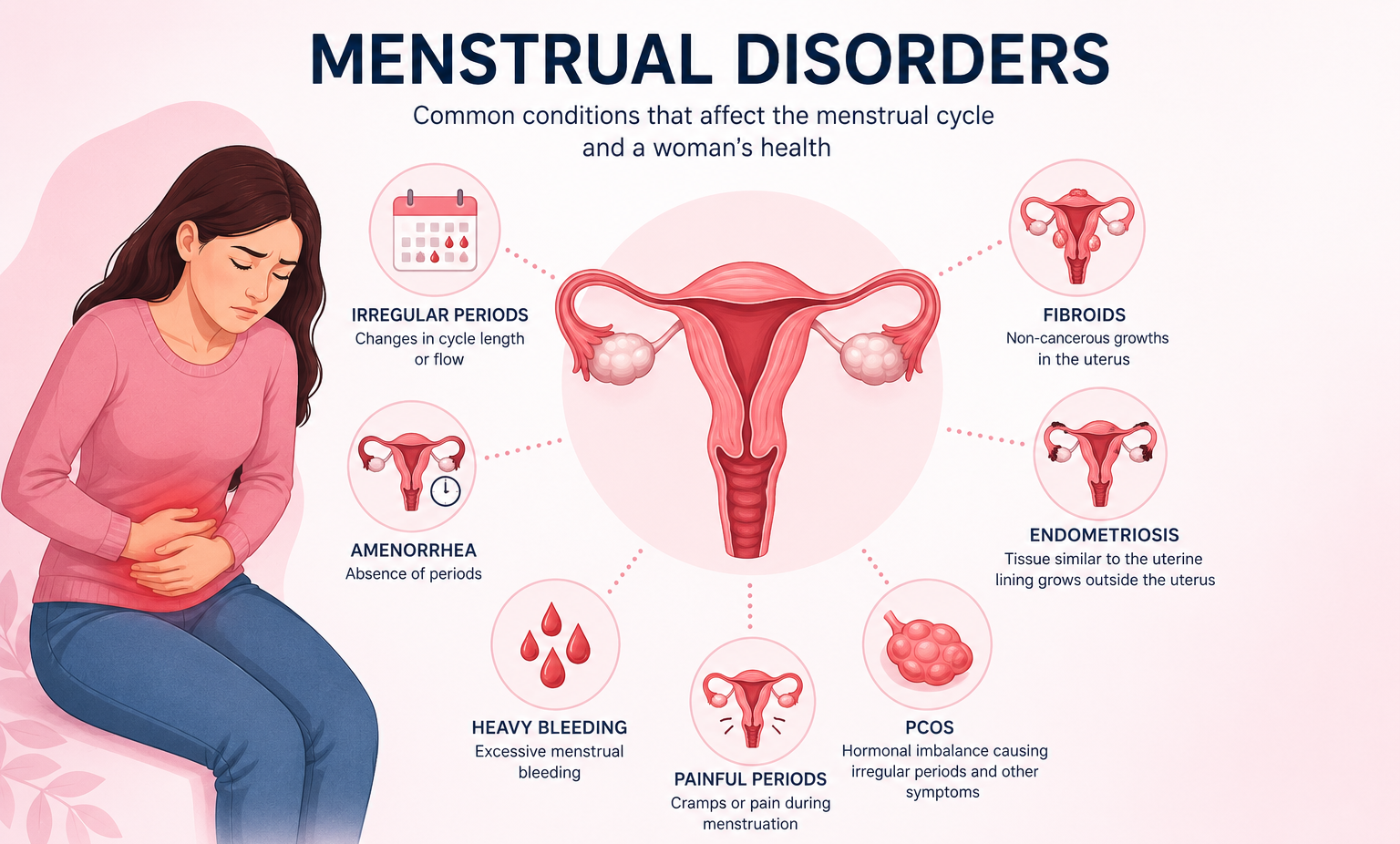
Menstrual disorders refer to any abnormality in a woman's menstrual cycle, including changes in the timing, duration, frequency, or amount of bleeding. These conditions can be caused by hormonal imbalances, reproductive disorders, thyroid disease, stress, or other medical conditions.
A normal menstrual cycle typically occurs every 21–35 days and lasts between 2–7 days.
Common Types of Menstrual Disorders
- Irregular Periods – Menstrual cycles that occur too frequently, too infrequently, or unpredictably.
- Heavy Menstrual Bleeding (Menorrhagia) – Excessive bleeding that lasts longer than seven days or requires frequent pad or tampon changes.
- Painful Periods (Dysmenorrhea) – Severe menstrual cramps that interfere with daily activities.
- Absent Periods (Amenorrhea) – Missing menstrual periods for several months due to pregnancy, hormonal disorders, excessive exercise, or medical conditions.
- Infrequent Periods (Oligomenorrhea) – Periods occurring more than 35 days apart.
- Premenstrual Syndrome (PMS) – Physical and emotional symptoms occurring before menstruation, including mood swings, bloating, headaches, and fatigue.
- Premenstrual Dysphoric Disorder (PMDD) – A severe form of PMS that significantly affects emotional well-being and daily functioning.
Common Symptoms of Menstrual Disorders
You should consult a gynecologist if you experience:
- Irregular menstrual cycles
- Very heavy bleeding
- Bleeding between periods
- Severe menstrual cramps
- Periods lasting longer than seven days
- Missed periods without pregnancy
- Pelvic pain
- Excessive fatigue during periods
- Large blood clots
- Mood changes before menstruation
- Difficulty becoming pregnant
Persistent symptoms should never be ignored, as they may indicate an underlying medical condition.
Causes of Menstrual Disorders
Several factors can affect the menstrual cycle, including:
- Hormonal imbalance
- PCOS (Polycystic Ovary Syndrome)
- Thyroid disorders
- Uterine fibroids
- Endometriosis
- Adenomyosis
- Pelvic inflammatory disease (PID)
- Stress and anxiety
- Obesity
- Sudden weight loss
- Excessive exercise
- Certain medications
- Perimenopause
Proper diagnosis is essential to determine the exact cause and provide effective treatment.
Diagnosis of Menstrual Disorders
An experienced gynecologist may recommend:
- Detailed medical history
- Physical and pelvic examination
- Blood tests
- Hormone profile
- Thyroid function tests
- Pregnancy test
- Pelvic ultrasound
- Transvaginal ultrasound
- Pap smear (when indicated)
- Hysteroscopy
- Endometrial biopsy (if required)
These investigations help identify the underlying cause and guide treatment.
Menstrual Disorders Treatment in Noida & Ghaziabad
Treatment depends on the cause, severity of symptoms, age, and future pregnancy plans.
-
Lifestyle Modifications
For mild cases, your doctor may recommend a healthy diet, regular exercise, weight management, stress reduction, adequate sleep, and iron-rich nutrition.
-
Medications
Medical treatment may include pain relief medications, hormonal therapy, oral contraceptive pills, progesterone therapy, iron supplements, thyroid medications (if required), and medicines to reduce heavy bleeding.
-
Minimally Invasive Procedures
For structural causes such as fibroids or polyps, advanced procedures may include hysteroscopy, laparoscopy, polypectomy, myomectomy, and endometrial ablation (for selected patients).
-
Surgical Treatment
Surgery is recommended only when conservative treatment is ineffective or when significant uterine abnormalities are present.
Possible Complications
Untreated menstrual disorders may lead to iron-deficiency anemia, chronic pelvic pain, infertility, hormonal imbalance, endometrial abnormalities, reduced quality of life, pregnancy complications, and severe fatigue.
Timely medical care helps prevent these complications and supports long-term reproductive health.
When Should You Visit a Gynecologist?
Seek medical advice if you experience:
- Heavy bleeding requiring pad changes every 1–2 hours
- Missed periods for three months or longer
- Severe menstrual pain
- Bleeding after menopause
- Bleeding between menstrual cycles
- Irregular periods for several months
- Difficulty conceiving
- Persistent pelvic pain
Early evaluation allows for accurate diagnosis and effective treatment.
Why Choose Menstrual Disorder Treatment in Noida & Ghaziabad?
- Experienced gynecologists
- Advanced diagnostic facilities
- Modern imaging support
- Minimally invasive treatment options
- Personalized care based on symptoms and fertility goals
- Comprehensive follow-up and medical support
Not always. Stress, hormonal changes, and lifestyle factors can cause temporary irregularities. However, persistent irregular periods should be evaluated by a gynecologist.
If you soak through one or more sanitary pads every hour for several hours, pass large blood clots, or experience dizziness or fatigue, consult your doctor immediately.
Yes. Conditions such as PCOS, endometriosis, thyroid disorders, and hormonal imbalances can interfere with ovulation and fertility if left untreated.
Mild cramps are common, but severe pain that disrupts daily activities may indicate conditions like endometriosis or adenomyosis and should be evaluated.
Yes. Many menstrual disorders can be successfully managed with lifestyle changes, medications, or hormonal therapy. Surgery is recommended only in selected cases.
Women should have regular gynecological check-ups, especially if they experience persistent menstrual irregularities, abnormal bleeding, or pelvic pain.

Dr. Anjana Singh
Our Services
Contact Info
Address
123 MG Road, Prayagraj, Uttar Pradesh, India
Phone
+91 98765 43210
care@womenshealth.com
Working Hours
Mon - Sat: 9:00 AM - 7:00 PM