Ovarian Cysts Treatment in Noida & Ghaziabad
Expert Diagnosis, Advanced Treatment & Personalized Women's Healthcare
Ovarian cysts are fluid-filled sacs that develop on or inside the ovaries. They are common among women of reproductive age and are often harmless, disappearing on their own without treatment. However, some ovarian cysts can grow larger, cause pain, disrupt menstrual cycles, affect fertility, or lead to complications if left untreated.
If you are looking for ovarian cyst treatment in Noida and Ghaziabad, experienced gynecologists provide accurate diagnosis and personalized treatment plans using advanced imaging, medication, minimally invasive laparoscopic surgery, and fertility-preserving techniques.
What are Ovarian Cysts?
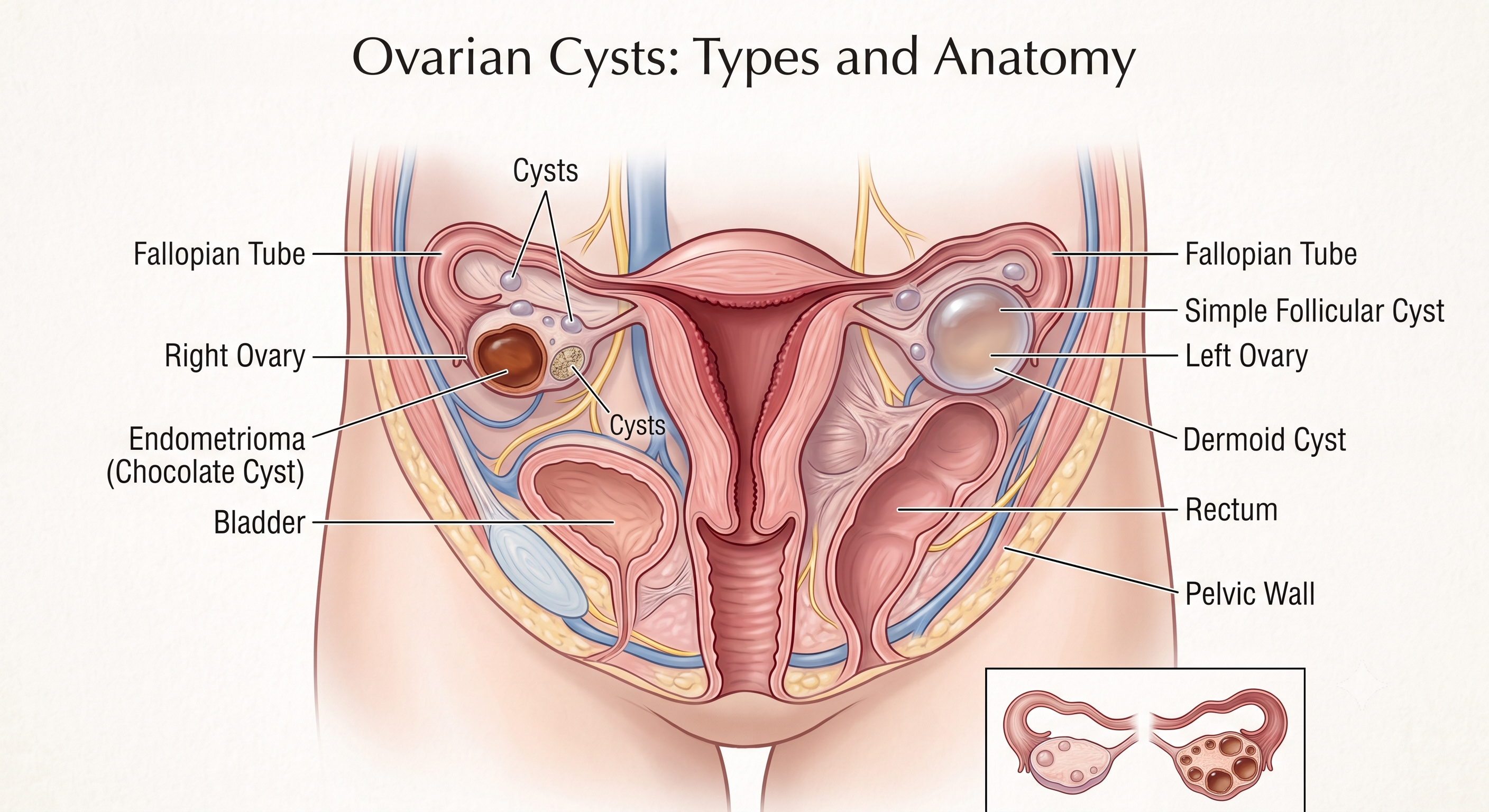
The ovaries are part of the female reproductive system and play an important role in producing eggs and hormones such as estrogen and progesterone. An ovarian cyst is a fluid-filled sac that forms on or within an ovary.
Most ovarian cysts are functional cysts, which develop as part of the normal menstrual cycle and usually resolve naturally within a few months. However, some cysts may require medical attention depending on their size, type, and symptoms.
Types of Ovarian Cysts
- Functional Cysts – The most common type, including follicular cysts and corpus luteum cysts.
- Dermoid Cysts (Mature Cystic Teratomas) – These contain different types of tissues such as hair, skin, or fat and are usually benign.
- Endometriomas – Also known as "chocolate cysts," these develop due to endometriosis and may affect fertility.
- Cystadenomas – These cysts arise from the outer surface of the ovary and may contain watery or mucus-like fluid.
- Polycystic Ovaries – Multiple small cysts associated with PCOS due to hormonal imbalance.
Symptoms of Ovarian Cysts
Many ovarian cysts cause no symptoms and are discovered during routine pelvic examinations or ultrasound scans.
When symptoms occur, they may include:
- Pelvic pain or discomfort
- Lower abdominal pain on one side
- Bloating or abdominal swelling
- Pain during intercourse
- Irregular menstrual periods
- Heavy or painful periods
- Frequent urination
- Difficulty emptying the bladder
- Pain during bowel movements
- Feeling full quickly after eating
- Difficulty conceiving in some cases
If you experience sudden, severe pelvic pain, fever, vomiting, or dizziness, seek immediate medical attention, as these may indicate a ruptured cyst or ovarian torsion.
Causes and Risk Factors
Several factors can increase the likelihood of developing ovarian cysts, including:
- Hormonal imbalance
- Ovulation-related changes
- Pregnancy
- Endometriosis
- PCOS (Polycystic Ovary Syndrome)
- Previous ovarian cysts
- Fertility medications
- Pelvic infections
Regular gynecological check-ups can help detect cysts early and prevent complications.
Diagnosis of Ovarian Cysts
Your gynecologist may recommend:
- Detailed medical history
- Pelvic examination
- Pelvic ultrasound
- Transvaginal ultrasound
- Pregnancy test
- Blood tests
- Hormonal evaluation
- Tumor marker tests (such as CA-125) when indicated
- MRI or CT scan for complex cysts
- Diagnostic laparoscopy in selected cases
An accurate diagnosis helps determine the type of cyst and the most appropriate treatment.
Ovarian Cyst Treatment in Noida & Ghaziabad
Treatment depends on the size, type, symptoms, age, and whether you plan to become pregnant.
-
Observation and Monitoring
Small, simple ovarian cysts that are not causing symptoms often disappear naturally. Your doctor may recommend regular follow-up visits, repeat ultrasound scans, and symptom monitoring.
-
Medications
Depending on your condition, treatment may include pain relief medications, hormonal contraceptives to reduce the formation of new cysts, hormonal therapy for associated conditions such as endometriosis, and treatment for underlying hormonal disorders.
-
Laparoscopic Ovarian Cyst Removal
If a cyst is large, persistent, painful, or appears suspicious, minimally invasive laparoscopic surgery may be recommended. Benefits include small incisions, less postoperative pain, minimal scarring, faster recovery, shorter hospital stay, and preservation of healthy ovarian tissue whenever possible.
-
Open Surgery (Laparotomy)
Large or complex cysts, or cysts suspected to be cancerous, may require open surgery. Your gynecologist will recommend the safest option based on your condition.
Ovarian Cysts and Fertility
Most ovarian cysts do not affect fertility. However, certain conditions such as endometriomas or PCOS may interfere with ovulation or conception.
Women planning pregnancy should seek timely evaluation so that fertility-preserving treatment options can be considered.
Possible Complications
Although many ovarian cysts are harmless, untreated or large cysts may lead to ovarian torsion, ruptured ovarian cyst, internal bleeding, chronic pelvic pain, infertility in some cases, infection, and rarely ovarian cancer depending on age and cyst characteristics.
Prompt treatment reduces the risk of serious complications.
Can Ovarian Cysts Be Prevented?
There is no guaranteed way to prevent ovarian cysts, but the following measures may help maintain reproductive health:
- Schedule regular gynecological examinations
- Seek treatment for irregular periods
- Maintain a healthy weight
- Manage hormonal disorders
- Follow a balanced diet
- Stay physically active
- Report persistent pelvic pain or menstrual changes promptly
When Should You See a Gynecologist?
Consult your gynecologist if you experience:
- Persistent pelvic or abdominal pain
- Irregular or heavy menstrual bleeding
- Bloating that does not improve
- Pain during intercourse
- Sudden severe pelvic pain
- Difficulty becoming pregnant
- Rapid increase in abdominal size
Early diagnosis allows timely treatment and helps preserve ovarian health and fertility.
Why Choose Ovarian Cyst Treatment in Noida & Ghaziabad?
- Experienced gynecologists
- Advanced ultrasound imaging
- Minimally invasive laparoscopic surgery
- Fertility-preserving treatments
- Comprehensive women's healthcare services
- Personalized treatment plans focused on symptom relief and long-term reproductive health
No. Most ovarian cysts are benign and resolve on their own. However, persistent, large, or complex cysts should be evaluated by a gynecologist.
Most ovarian cysts do not interfere with pregnancy. However, large cysts or cysts associated with endometriosis or PCOS may require monitoring or treatment.
No. Many cysts can be managed with observation and medication. Surgery is recommended only when cysts are large, persistent, painful, or suspicious.
Yes. Some women may develop new ovarian cysts in the future, particularly if they have hormonal disorders or PCOS. Regular follow-up is recommended.
Yes. Laparoscopic cyst removal is a safe and effective minimally invasive procedure for most benign ovarian cysts, offering quicker recovery and less postoperative discomfort.
A ruptured ovarian cyst may cause sudden, severe pelvic pain, dizziness, fainting, nausea, or heavy bleeding. Seek emergency medical care immediately if these symptoms occur.

Dr. Anjana Singh
Our Services
Contact Info
Address
123 MG Road, Prayagraj, Uttar Pradesh, India
Phone
+91 98765 43210
care@womenshealth.com
Working Hours
Mon - Sat: 9:00 AM - 7:00 PM