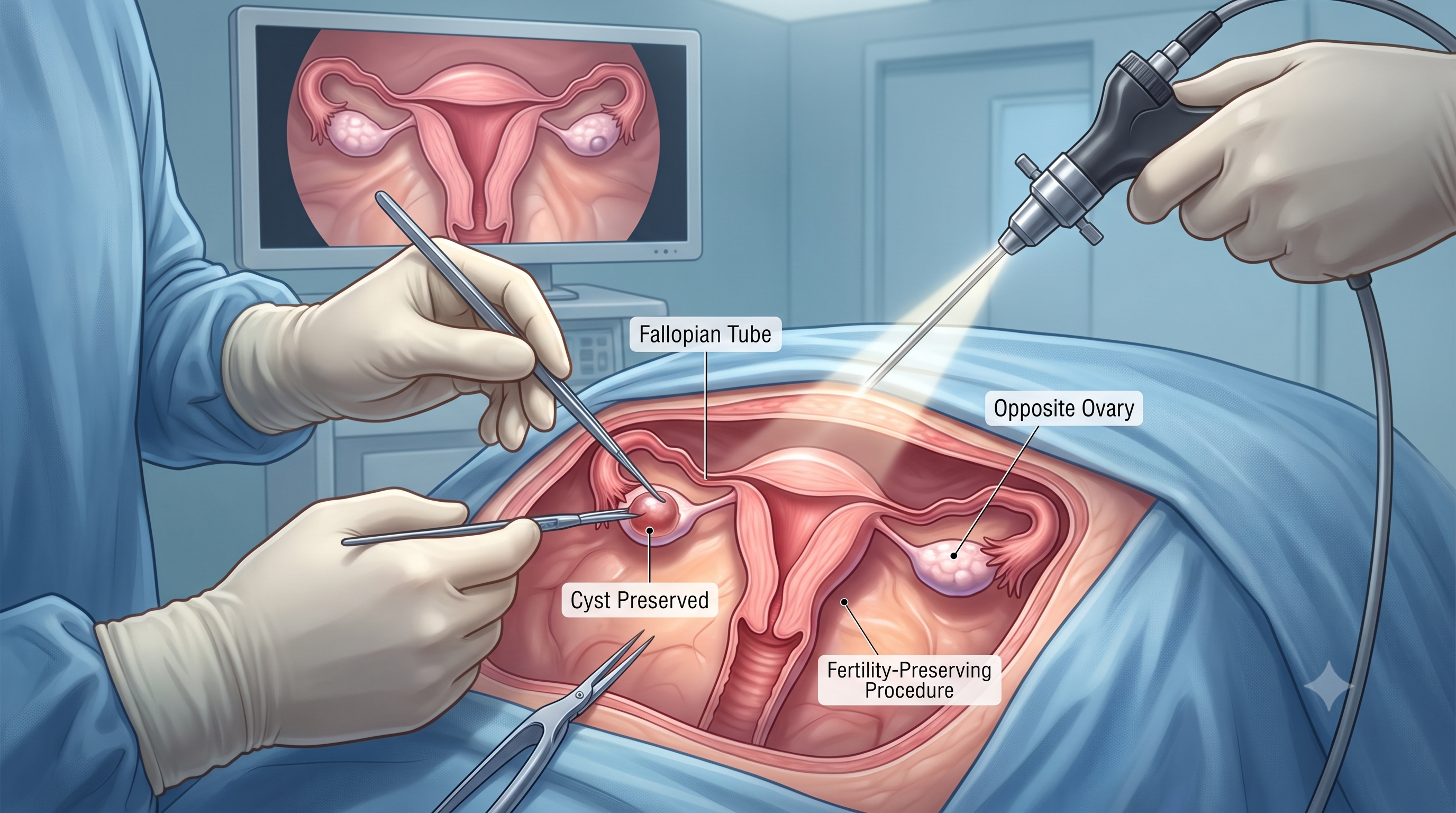
Robotic Fertility-Preserving Surgery in Noida & Ghaziabad
Advanced Minimally Invasive Surgery to Protect Your Fertility and Reproductive Health
Robotic fertility-preserving surgery is an advanced minimally invasive surgical approach designed to treat gynecological conditions while preserving the uterus, ovaries, and reproductive function whenever medically possible. Using state-of-the-art robotic technology, experienced gynecologic surgeons can perform complex procedures with exceptional precision through small incisions, helping women achieve better surgical outcomes while maintaining their future fertility potential.
If you are looking for robotic fertility-preserving surgery in Noida and Ghaziabad, experienced gynecologists provide personalized treatment plans using advanced robotic-assisted techniques to manage conditions affecting fertility while protecting your reproductive health.
What is Robotic Fertility-Preserving Surgery?
Robotic fertility-preserving surgery involves the use of robotic-assisted technology to treat gynecological diseases without unnecessarily removing the uterus or ovaries. The robotic platform provides high-definition 3D visualization and highly flexible surgical instruments that allow surgeons to perform delicate procedures with remarkable accuracy.
The goal is to effectively treat the underlying condition while preserving the patient's ability to conceive naturally or through assisted reproductive techniques, whenever appropriate. It is important to note that the robotic system is completely controlled by the surgeon throughout the procedure.
Who May Benefit from Fertility-Preserving Surgery?
Robotic fertility-preserving surgery may be recommended for women who:
- Wish to have children in the future
- Have symptomatic uterine fibroids
- Have ovarian cysts requiring surgical removal
- Have endometriosis affecting fertility
- Experience recurrent pregnancy loss related to uterine abnormalities
- Have congenital uterine abnormalities
- Need treatment for pelvic adhesions
- Have selected early-stage gynecological conditions where fertility preservation is considered appropriate
Your gynecologist will determine whether robotic surgery is suitable based on your age, diagnosis, reproductive goals, and overall health.
Conditions Treated with Robotic Fertility-Preserving Surgery
Depending on the individual case, robotic surgery may be used for:
- Robotic Myomectomy – Removal of uterine fibroids while preserving the uterus.
- Robotic Ovarian Cystectomy – Removal of ovarian cysts while protecting healthy ovarian tissue.
- Robotic Endometriosis Surgery – Precise removal of endometriosis lesions and adhesions to improve pelvic function and fertility when indicated.
- Robotic Adhesiolysis – Removal of scar tissue (adhesions) affecting the reproductive organs.
- Correction of Congenital Uterine Abnormalities – Selected uterine abnormalities may be corrected using minimally invasive robotic techniques.
Each treatment plan is tailored to the patient's medical condition and fertility goals.
Symptoms That May Require Evaluation
Consult a gynecologist if you experience:
- Difficulty conceiving
- Heavy menstrual bleeding
- Chronic pelvic pain
- Pain during menstruation
- Pain during sexual intercourse
- Recurrent miscarriages
- Large uterine fibroids
- Persistent ovarian cysts
- Irregular menstrual cycles
- Known endometriosis
Early diagnosis and treatment may improve reproductive outcomes.
Benefits of Robotic Fertility-Preserving Surgery
Compared with traditional open surgery, robotic-assisted procedures offer several benefits:
- Smaller incisions
- Greater surgical precision
- High-definition 3D visualization
- Better preservation of healthy reproductive organs
- Less postoperative pain
- Reduced blood loss
- Lower risk of infection
- Minimal scarring
- Faster recovery
- Shorter hospital stay
- Earlier return to normal activities
These advantages are particularly valuable for women planning future pregnancies.
Evaluation Before Surgery
Before recommending surgery, your gynecologist may perform:
- Detailed medical history
- Physical and pelvic examination
- Pelvic ultrasound
- Transvaginal ultrasound
- MRI scan when indicated
- Hormonal evaluation
- Ovarian reserve testing such as AMH when appropriate
- Blood investigations
- Fertility assessment
- Semen analysis for the partner if evaluating infertility
- Pre-anesthesia evaluation
These investigations help determine the best treatment strategy while optimizing fertility outcomes.
How is Robotic Fertility-Preserving Surgery Performed?
The procedure is performed under general anesthesia.
- Small incisions are made in the abdomen.
- A high-definition 3D camera provides a detailed view of the pelvic organs.
- Robotic surgical instruments are introduced through the small incisions.
- The surgeon carefully removes diseased tissue while preserving healthy reproductive organs whenever possible.
- The uterus, ovaries, or fallopian tubes are reconstructed if necessary.
- The small incisions are closed with sutures.
The duration of surgery depends on the complexity of the condition being treated.
Recovery After Surgery
Most women recover faster than after traditional open surgery.
- Hospital stay of 1–2 days
- Walking within 24 hours
- Mild postoperative discomfort controlled with medications
- Return to light daily activities within 2–3 weeks
- Complete recovery in approximately 4–6 weeks
Your doctor will provide individualized postoperative care instructions and guidance on when it is safe to attempt pregnancy.
Fertility After Robotic Surgery
Many women experience improved fertility following fertility-preserving surgery, particularly when the procedure addresses conditions such as fibroids, endometriosis, ovarian cysts, or pelvic adhesions.
The timing for attempting pregnancy depends on the type of surgery performed, healing of the uterus or ovaries, your overall reproductive health, and your doctor's recommendations. Some women may conceive naturally, while others may benefit from assisted reproductive techniques such as IVF if indicated.
Possible Risks
Although robotic fertility-preserving surgery is considered safe, potential risks include bleeding, infection, injury to nearby organs, scar tissue formation, recurrence of the underlying condition, rare conversion to open surgery, and anesthesia-related complications.
Your surgeon will discuss the potential risks and expected benefits before surgery.
When Should You See a Fertility Specialist?
Consult a gynecologist or fertility specialist if you:
- Have been trying to conceive without success
- Have known uterine fibroids or endometriosis
- Experience recurrent miscarriages
- Have persistent ovarian cysts
- Have severe pelvic pain affecting fertility
- Need surgery but wish to preserve your fertility
- Have been advised to consider fertility-preserving treatment
Early intervention can improve reproductive outcomes and expand your treatment options.
Why Choose Robotic Fertility-Preserving Surgery in Noida & Ghaziabad?
- Experienced gynecologic surgeons
- Advanced robotic technology
- High-definition 3D imaging
- Minimally invasive techniques
- Fertility-focused surgical planning
- Comprehensive reproductive care
- Personalized treatment plans designed to preserve reproductive health and maximize the chances of a healthy future pregnancy
The primary goal is to treat gynecological conditions while preserving the uterus, ovaries, and reproductive function whenever medically feasible.
Many women successfully conceive after fertility-preserving procedures. The outcome depends on your underlying condition, age, ovarian reserve, and overall reproductive health.
For appropriately selected patients, robotic surgery offers excellent precision, reduced tissue trauma, and better preservation of healthy reproductive organs compared with traditional open surgery.
The recommended waiting period varies depending on the type of surgery performed. Your gynecologist will provide individualized guidance after your recovery.
Most patients experience significantly less postoperative pain than with traditional open surgery because of the minimally invasive approach.
Women with fibroids, endometriosis, ovarian cysts, pelvic adhesions, congenital uterine abnormalities, or selected gynecological conditions who wish to preserve their fertility may be suitable candidates after a thorough evaluation.
Dr.Anjana Singh
Our Services
- Robotic Hysterectomy
- Robotic Myomectomy (Fibroid Surgery)
- Robotic Endometriosis Surgery
- Robotic Ovarian Cyst Surgery
- Robotic Pelvic Organ Prolapse Repair
- Robotic Cancer Surgery
- Robotic Fertility-Preserving Surgery
- Single-Port Robotic Surgery
- Why Choose Robotic Surgery?
- Recovery After Robotic Surgery
Contact Info
Address
123 MG Road, Prayagraj, Uttar Pradesh, India
Phone
+91 98765 43210
care@womenshealth.com
Working Hours
Mon - Sat: 9:00 AM - 7:00 PM