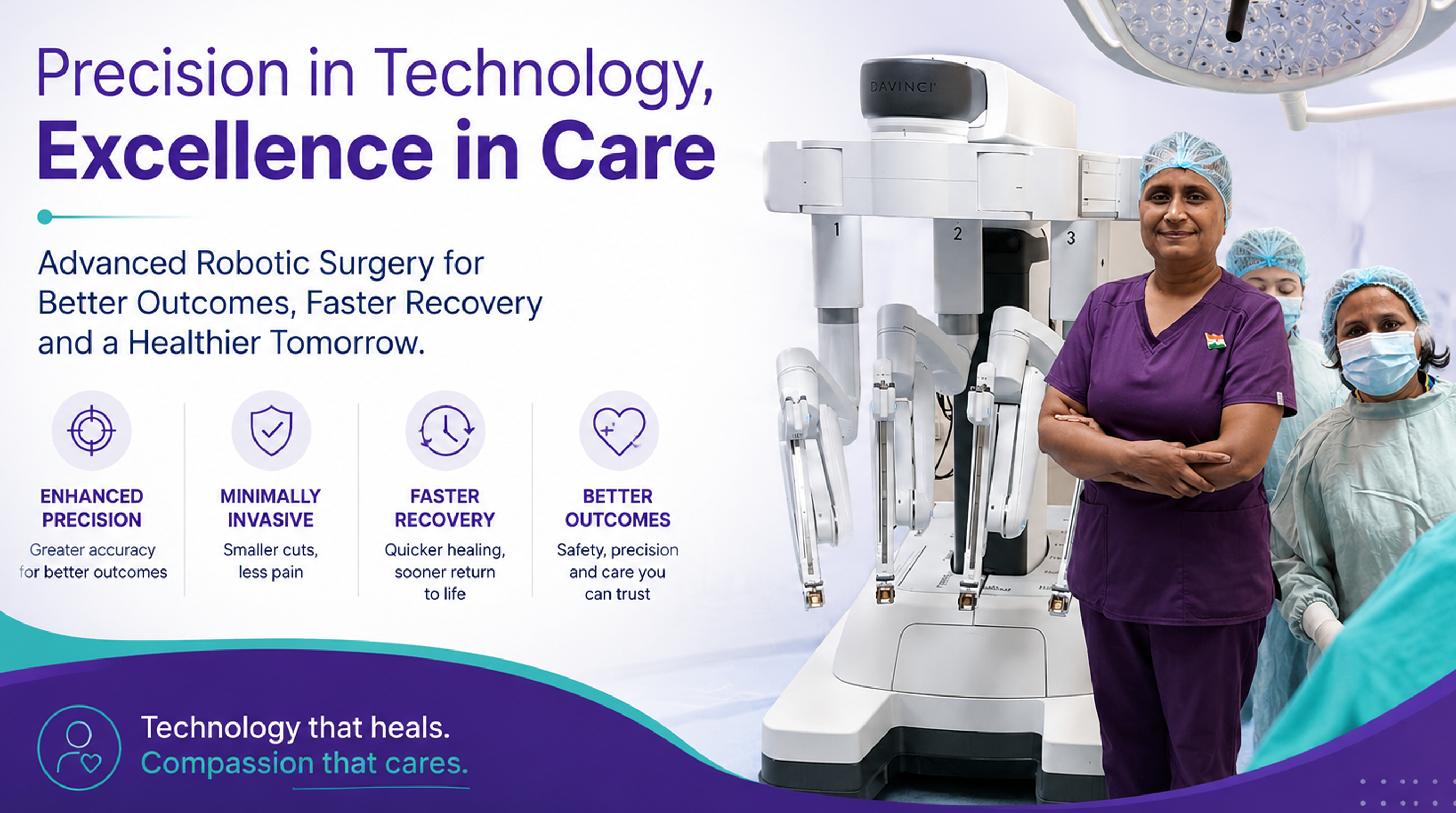
Robotic Endometriosis Surgery in Noida & Ghaziabad
Advanced Minimally Invasive Treatment for Lasting Relief from Endometriosis
Robotic Endometriosis Surgery is an advanced minimally invasive procedure designed to remove endometriosis tissue with exceptional precision while preserving healthy organs whenever possible. Endometriosis is a chronic condition in which tissue similar to the lining of the uterus grows outside the uterus, causing pelvic pain, painful periods, infertility, and reduced quality of life. If you are looking for Robotic Endometriosis Surgery in Noida and Ghaziabad, experienced robotic gynecologic surgeons offer personalized treatment using state-of-the-art robotic technology to relieve symptoms, improve fertility outcomes in selected patients, and promote faster recovery.
What is Endometriosis?
Endometriosis occurs when tissue similar to the uterine lining grows outside the uterus, commonly affecting the ovaries, fallopian tubes, pelvic lining, uterus, bladder, bowel, and ligaments supporting the uterus. These growths respond to hormonal changes during the menstrual cycle, leading to inflammation, scarring, adhesions, and chronic pelvic pain.
What is Robotic Endometriosis Surgery?
Robotic Endometriosis Surgery is a minimally invasive procedure performed using an advanced robotic surgical system. The surgeon controls robotic instruments from a console, allowing highly precise movements and a magnified high-definition 3D view of the pelvic organs. The robotic system enhances the surgeon's ability to remove endometriosis implants, scar tissue, and adhesions while minimizing damage to surrounding healthy tissues. The robot does not perform the surgery independently; every movement is fully controlled by the surgeon.
Who May Need Robotic Endometriosis Surgery?
Your gynecologist may recommend robotic surgery if you have:
- Moderate to severe endometriosis
- Chronic pelvic pain
- Severe menstrual pain not relieved with medication
- Pain during intercourse
- Endometriosis-related infertility
- Ovarian endometriomas or chocolate cysts
- Bowel or bladder endometriosis
- Recurrent endometriosis after previous treatment
- Pelvic adhesions affecting normal organ function
The decision for surgery depends on your symptoms, fertility goals, and response to previous treatments.
Symptoms of Endometriosis
Common symptoms include:
- Severe menstrual cramps
- Chronic pelvic pain
- Heavy menstrual bleeding
- Pain during or after sexual intercourse
- Pain during bowel movements or urination, especially during periods
- Infertility
- Lower back pain
- Fatigue
- Bloating
Some women with endometriosis may have minimal symptoms, while others experience significant discomfort.
Benefits of Robotic Endometriosis Surgery
Robotic-assisted surgery offers several advantages over traditional open surgery and may provide benefits over conventional laparoscopy in selected complex cases.
- Smaller incisions
- Enhanced surgical precision
- High-definition 3D visualization
- Better access to deep pelvic structures
- More accurate removal of endometriosis tissue
- Preservation of healthy reproductive organs whenever possible
- Reduced blood loss
- Less postoperative pain
- Lower risk of wound infection
- Minimal scarring
- Shorter hospital stay
- Faster recovery
- Earlier return to normal activities
Conditions Treated During Robotic Surgery
Robotic surgery can be used to manage:
- Deep infiltrating endometriosis
- Ovarian endometriomas
- Pelvic adhesions
- Endometriosis involving the bladder or bowel
- Fertility-related endometriosis
- Endometriosis affecting pelvic ligaments
- Recurrent endometriosis
In complex cases, a multidisciplinary team may be involved to provide comprehensive care.
Diagnosis Before Surgery
Your specialist may recommend:
- Detailed medical history
- Pelvic examination
- Pelvic ultrasound
- Transvaginal ultrasound
- MRI scan when indicated
- Blood investigations
- Fertility assessment if pregnancy is desired
While imaging studies can suggest endometriosis, laparoscopy or robotic surgery may be required to confirm the diagnosis and treat the condition.
How is Robotic Endometriosis Surgery Performed?
The procedure is performed under general anesthesia.
During surgery, a few small incisions are made in the abdomen, a high-definition robotic camera and specialized instruments are inserted, the surgeon carefully identifies endometriosis lesions, endometriosis tissue, scar tissue, and adhesions are removed while preserving healthy organs whenever possible, and the instruments are removed before the incisions are closed. The duration of surgery depends on the extent and severity of the disease.
Recovery After Surgery
Recovery following robotic surgery is generally faster than after open surgery.
- Hospital stay of 1–2 days
- Walking within 24 hours
- Mild postoperative discomfort managed with medication
- Return to light daily activities within 1–2 weeks
- Full recovery in approximately 3–6 weeks, depending on the complexity of the procedure
Following your surgeon's postoperative instructions is important for optimal healing.
Possible Risks
Although robotic surgery is considered safe when performed by experienced surgeons, potential risks include bleeding, infection, injury to nearby organs such as the bowel, bladder, or ureters, blood clots, adhesion formation, recurrence of endometriosis, need for additional surgery in rare cases, and anesthesia-related complications.
Your surgeon will discuss the benefits and potential risks based on your individual condition.
When Should You Consult a Gynecologist?
Seek medical advice if you experience:
- Severe menstrual pain
- Chronic pelvic pain
- Difficulty becoming pregnant
- Pain during intercourse
- Persistent ovarian cysts
- Heavy menstrual bleeding
- Symptoms that interfere with your daily life despite medication
Early diagnosis and appropriate treatment can improve symptom control and protect reproductive health.
Why Choose Robotic Endometriosis Surgery in Noida & Ghaziabad?
Patients seeking Robotic Endometriosis Surgery in Noida and Ghaziabad benefit from experienced robotic gynecologic surgeons, advanced robotic technology, high-definition 3D imaging, comprehensive endometriosis evaluation, fertility-preserving surgical techniques, and personalized postoperative care. Treatment plans are designed to relieve pain, improve quality of life, and support future fertility whenever possible.
Frequently Asked Questions
- Is robotic surgery better than open surgery for endometriosis? For many patients, robotic surgery offers advantages such as smaller incisions, less pain, reduced blood loss, shorter hospital stays, and faster recovery. The best surgical approach depends on the severity and location of the disease.
- Can robotic surgery improve fertility? In selected women with endometriosis-related infertility, surgical removal of endometriosis and adhesions may improve fertility. However, outcomes vary depending on age, disease severity, ovarian reserve, and other fertility factors.
- Will endometriosis come back after surgery? Endometriosis can recur after surgery. The risk varies depending on the extent of the disease, the completeness of lesion removal, hormonal influences, and long-term management.
- Is robotic endometriosis surgery safe? Yes. When performed by an experienced robotic gynecologic surgeon, robotic surgery is considered a safe and effective treatment option for appropriately selected patients.
- How long is the recovery after robotic surgery? Most patients resume light daily activities within 1–2 weeks, while complete recovery generally takes 3–6 weeks, depending on the extent of surgery.
- Does robotic surgery leave large scars? No. Robotic surgery uses several small incisions, resulting in minimal scarring compared with traditional open surgery.
For many patients, robotic surgery offers advantages such as smaller incisions, less pain, reduced blood loss, shorter hospital stays, and faster recovery. The best surgical approach depends on the severity and location of the disease.
In selected women with endometriosis-related infertility, surgical removal of endometriosis and adhesions may improve fertility. However, outcomes vary depending on age, disease severity, ovarian reserve, and other fertility factors.
Endometriosis can recur after surgery. The risk varies depending on the extent of the disease, the completeness of lesion removal, hormonal influences, and long-term management.
Yes. When performed by an experienced robotic gynecologic surgeon, robotic surgery is considered a safe and effective treatment option for appropriately selected patients.
Most patients resume light daily activities within 1–2 weeks, while complete recovery generally takes 3–6 weeks, depending on the extent of surgery.
No. Robotic surgery uses several small incisions, resulting in minimal scarring compared with traditional open surgery.

Dr.Anjana Singh
Our Services
- Robotic Hysterectomy
- Robotic Myomectomy (Fibroid Surgery)
- Robotic Endometriosis Surgery
- Robotic Ovarian Cyst Surgery
- Robotic Pelvic Organ Prolapse Repair
- Robotic Cancer Surgery
- Robotic Fertility-Preserving Surgery
- Single-Port Robotic Surgery
- Why Choose Robotic Surgery?
- Recovery After Robotic Surgery
Contact Info
Address
123 MG Road, Prayagraj, Uttar Pradesh, India
Phone
+91 98765 43210
care@womenshealth.com
Working Hours
Mon - Sat: 9:00 AM - 7:00 PM